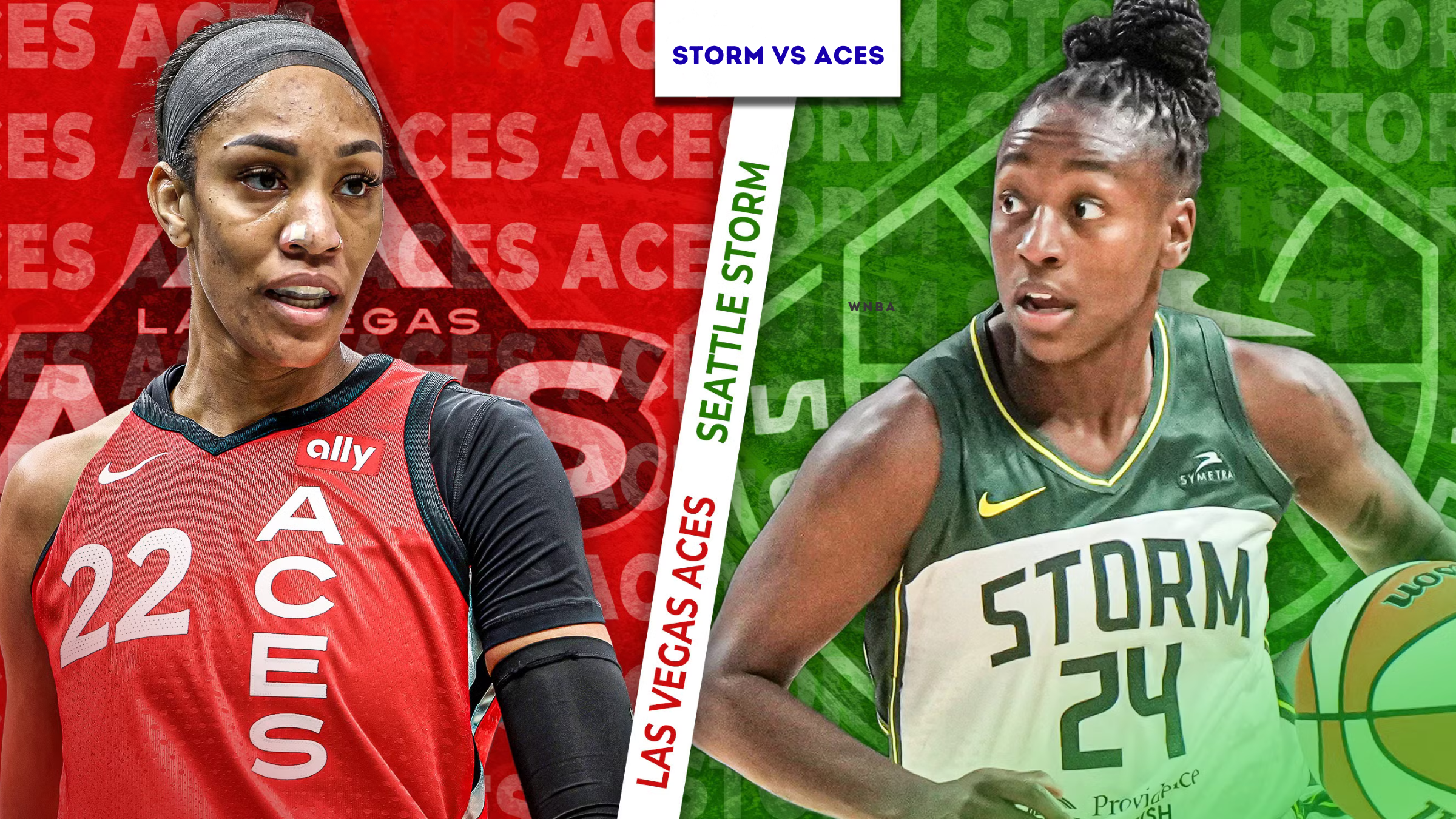
storm vs aces
Introduction
The storm vs aces rivalry has become one of the most exciting storylines in the WNBA. Whenever the Seattle Storm and the Las Vegas Aces face off, fans know they’re about to see elite talent, strategic coaching, and playoff-level intensity — even in the regular season. Both teams are stacked with stars, both have championship pedigrees, and both push the pace in ways that keep highlight reels full.
This article gives you a complete breakdown of storm vs aces from every angle. We’ll cover the rivalry history, the current rosters, key player matchups, tactical battles, betting outlooks, and a final prediction. The goal is to provide an in-depth, keyword-rich preview that helps fans, bettors, and analysts understand what truly decides the outcome when these two giants clash.
The focus keyword storm vs aces will appear naturally throughout the analysis, along with related keywords like “Seattle Storm vs Las Vegas Aces preview,” “Storm vs Aces odds,” “WNBA matchup analysis,” “key players,” and “game prediction.” By the end of this guide, you’ll be fully prepared for the next showdown between these powerhouses.
A Rivalry That Defines the Modern WNBA
In recent years, storm vs aces has evolved into more than just a basketball game — it’s become a statement matchup. Seattle’s tradition of disciplined defense and elite guard play consistently clashes with Las Vegas’s inside dominance, speed, and ability to control the paint.
- The Seattle Storm are known for their organized sets, ball movement, and ability to hit big shots in crunch time. From legends like Sue Bird to current stars like Jewell Loyd and Skylar Diggins, the Storm have relied on leadership from the backcourt.
- The Las Vegas Aces are powered by size, athleticism, and the unstoppable force that is A’ja Wilson. They thrive on rebounding, fast breaks, and overwhelming depth. Add in the recent arrival of Jewell Loyd to the Aces roster, and suddenly this rivalry has even more drama.
Every storm vs aces meeting feels like a playoff series preview, and in many cases, it actually is. These two teams have met in high-stakes postseason matchups where everything is magnified: possessions are tighter, rotations are shorter, and superstars are expected to deliver.
Quick Head-to-Head Context
When examining storm vs aces historically, the results have been close. Neither team has truly dominated the other across the last few seasons, which makes every meeting unpredictable. The Aces have enjoyed strong regular-season records thanks to their depth, while the Storm have leaned on discipline and experience.
What makes this rivalry special is that the games rarely turn into blowouts. Instead, they are typically decided by a handful of possessions in the final minutes. Fans remember Storm victories where clutch three-point shooting made the difference, as well as Aces wins where Wilson simply could not be stopped inside.
Key Players Who Define Storm vs Aces
A’ja Wilson (Aces)
If there’s one name that dictates how the storm vs aces narrative unfolds, it’s A’ja Wilson. She’s a former MVP, an elite rebounder, and the emotional leader of Las Vegas. Whenever she dominates in the paint — grabbing offensive boards, scoring in the post, and forcing double teams — the Aces almost always win. Seattle’s strategy in every meeting revolves around finding ways to slow her down, though few have succeeded.
Jewell Loyd (formerly Storm, now Aces)
The addition of Jewell Loyd to the Aces added a twist to this rivalry. Loyd, long considered Seattle’s offensive engine, now suits up against her former team. That makes every storm vs aces meeting more than just a battle for standings — it’s personal. Loyd’s scoring versatility, three-point shooting, and ability to attack off the dribble create headaches for her old teammates.
Skylar Diggins (Storm)
For the Storm, Skylar Diggins is the guard who makes everything flow. She can score, but her real value is creating pace, setting tempo, and breaking down defenses with dribble penetration. When Diggins controls the game, the Storm are able to compete toe-to-toe with Las Vegas’s star-studded lineup.
Supporting Casts
The difference between winning and losing in storm vs aces often comes down to role players. For Seattle, forwards who can stretch the floor and guards who can defend the perimeter are crucial. For Las Vegas, bench scoring and defensive specialists keep their stars fresh and effective.
Why Storm vs Aces Captures Attention
The reason this matchup is so compelling is because it blends storylines, talent, and stakes. It’s a battle of old vs new, guards vs forwards, defense vs offense. Every possession feels like a test of wills.
Fans looking at storm vs aces don’t just see two teams — they see two philosophies. Seattle represents structure, ball security, and execution, while Las Vegas represents raw power, athletic dominance, and highlight plays. That’s why neutral fans circle this game on the calendar and why analysts spend hours breaking down every detail.
Tactical Matchups and Game Analysis
Battle in the Paint: A’ja Wilson vs Seattle’s Interior
The defining element of storm vs aces is almost always who wins the paint. Las Vegas runs its offense through A’ja Wilson, who forces Seattle to adjust defensive rotations. Double-teams open up perimeter shooters; single coverage risks Wilson dropping 25+ points with ease.
Seattle’s interior defense has improved, but the Storm lack a true one-on-one stopper for Wilson. Instead, they rely on help defense, collapsing guards, and aggressive rebounding to neutralize her impact. This strategy, however, comes with a price: leaving shooters open on the perimeter.
If the Storm can hold Wilson under control — not stop her, but keep her from completely taking over — they create a path to victory. But if Wilson gets to the free-throw line 10+ times, history suggests the Aces usually walk away with the win.
Guard Play: Diggins and Loyd vs Las Vegas Perimeter
The Storm’s advantage lies in the backcourt matchup. Skylar Diggins, Jewell Loyd’s former teammate, thrives in high-pressure games. She can dictate tempo, find mismatches, and score in crunch time. In storm vs aces, Diggins is the guard who sets the tone.
Las Vegas, on the other hand, leans on Loyd and their depth to counter Seattle’s backcourt. Loyd’s scoring ability means Seattle can’t overhelp in the paint, forcing the Storm to choose: stop Wilson inside or limit Loyd outside. This dual-threat combination creates a classic pick-your-poison scenario.
The Storm’s hope is that Diggins can outduel her former teammate by controlling pace and avoiding turnovers. If Diggins forces Las Vegas into half-court sets, Seattle gains an edge. But if the Aces push tempo, the Storm defense risks breaking down.
Pace and Transition Offense
Tempo is another critical factor in storm vs aces. The Aces thrive in transition, where Wilson runs the floor and Loyd spots up for early threes. Quick ball movement leads to mismatches before defenses can set.
Seattle, however, plays best in the half-court. The Storm prefer to slow the game, execute set plays, and let Diggins and shooters dictate matchups. If this game turns into a track meet, Las Vegas holds the upper hand. If Seattle drags it into a grind, they can force the Aces into uncomfortable possessions.
This makes turnovers the hidden stat. In past meetings, the team with fewer turnovers usually comes out on top. Every live-ball turnover against Las Vegas almost guarantees fast-break points, while every forced half-court possession favors Seattle’s disciplined approach.
Three-Point Shooting: The Swing Factor
Another element that often decides storm vs aces is perimeter shooting. The Aces rely heavily on Wilson and paint production, but their shooters — including Loyd — punish defenses that collapse too much. When the Aces hit 10+ threes, they become nearly unbeatable.
Seattle, meanwhile, has lived by the three for years. From Sue Bird’s era to Loyd’s prime and now Diggins-led spacing, the Storm use the perimeter as an equalizer. In matchups against Las Vegas, timely three-point shooting often makes the difference between a close win and a narrow loss.
If Seattle knocks down 35% or better from beyond the arc, the Aces’ size advantage shrinks. If the Storm goes cold from deep, Las Vegas dominates inside and runs away late.
Bench and Depth
Depth is often overlooked, but it plays a massive role in storm vs aces. Las Vegas’s bench has been a strength, allowing Wilson and Loyd to rest while secondary players maintain intensity. Their second unit brings energy, rebounding, and defensive versatility.
Seattle’s bench, however, has historically been less reliable. When role players step up — hitting open shots, defending without fouls, and rebounding — the Storm compete on equal footing. But when the bench is outscored heavily, Seattle struggles to keep pace in the fourth quarter.
Fans should watch for who provides that unexpected spark. A defensive specialist shutting down a hot shooter or a reserve dropping 12 points can swing momentum in a rivalry this close.
Coaching Chess Match
Behind every storm vs aces clash is a duel of coaches. Las Vegas uses a player-empowered system that gives Wilson and Loyd the freedom to attack mismatches. Seattle relies on structured execution, designing plays to minimize mistakes and maximize late-game efficiency.
The coaching chess match becomes especially visible in crunch time. Who calls the right timeout? Who makes the defensive substitution that changes momentum? Who trusts their bench in a critical stretch? These decisions often tilt the scales.
Mid-Game Adjustments Decide the Winner
What separates storm vs aces from many WNBA rivalries is how often the game flips after halftime. One team dominates early, then adjustments at the break swing momentum. Seattle’s half-court defense tightens, or Las Vegas ramps up tempo and offensive rebounding.
For fans and bettors alike, halftime is often when the real game begins. The first two quarters reveal the blueprint; the last two decide who executes best.
X-Factors, Injuries, Betting Outlook & Prediction
The X-Factors in Storm vs Aces
Every major rivalry comes down to superstars, but in storm vs aces, it’s often the secondary players who tip the balance.
Seattle’s X-Factors
- Perimeter Defense: The Storm need their wings to lock down Las Vegas’s shooters. A single defensive specialist who can contain Jewell Loyd or chase shooters off the arc can dramatically alter momentum.
- Offensive Glass: Extra possessions are a must when facing A’ja Wilson. Seattle’s bigs don’t need to out-rebound Las Vegas, but they must fight for second chances to keep the scoreboard ticking.
- Clutch Shooting: One or two unexpected threes from a role player often decide close storm vs aces games.
Las Vegas’s X-Factors
- Bench Scoring: The Aces thrive when their reserves stretch leads while stars rest. If they win the bench points battle, it usually signals a comfortable win.
- Ball Movement: When the Aces fall into isolation-heavy basketball, Seattle can exploit that. But when the ball zips side-to-side, Las Vegas becomes almost impossible to defend.
- Defensive Pressure: Aces guards applying pressure on Diggins can disrupt Seattle’s entire flow. If they force turnovers, transition baskets pile up quickly.
Injury Impact on Storm vs Aces
Injuries are often the hidden storyline behind storm vs aces. Both teams rely heavily on their stars, so even a minor knock can shift the balance.
- If A’ja Wilson is less than 100%, Las Vegas loses its anchor on both ends.
- If Skylar Diggins deals with fatigue or a lingering issue, Seattle’s offense slows down significantly.
- Even role-player absences matter. Missing a defensive wing or stretch forward can open gaps the opponent exploits.
That’s why bettors and fans alike monitor injury reports closely before tipoff. In this rivalry, health can be the ultimate equalizer.
Advanced Stats That Define the Rivalry
Numbers often tell the story in storm vs aces. A few advanced metrics consistently separate wins from losses:
- Rebound Percentage: When the Aces grab 55% or more of available rebounds, they usually dominate. Seattle must limit second-chance points to stay competitive.
- Turnover Ratio: The Storm are at their best when they average under 12 turnovers. Anything higher fuels Las Vegas’s transition game.
- Effective Field Goal Percentage (eFG%): This stat captures three-point value. When Seattle wins the eFG% battle, they typically pull off the upset.
- Free Throw Rate: Wilson’s ability to get to the line skews this stat heavily in Las Vegas’s favor. If Seattle can keep her under eight attempts, the game stays close.
Betting Analysis for Storm vs Aces
The storm vs aces rivalry has become a favorite for bettors because of how competitive and unpredictable it is. Here are the main betting angles to consider:
Point Spread
Las Vegas often enters as the favorite, especially at home. Bettors who back Seattle usually do so because of value — the Storm tend to cover spreads in close games. If the spread is wide (say, +7 or more), Seattle often appeals as the smart play.
Over/Under Totals
Totals usually hinge on pace. A fast, transition-heavy game pushes scores over 170 points. A half-court, grind-it-out battle keeps totals closer to the 150s. Understanding tempo is crucial before betting the over or under.
Prop Bets
- A’ja Wilson points + rebounds: Almost always a reliable prop if Seattle lacks strong interior defense.
- Skylar Diggins assists: A good play when Seattle emphasizes ball movement.
- Jewell Loyd threes made: Especially interesting now that she’s in Las Vegas, playing against her former teammates.
Props allow bettors to capitalize on individual matchups rather than guessing the outcome of a tight game.
Prediction: Who Wins Storm vs Aces?
Every time we preview storm vs aces, the margins are razor-thin. On paper, Las Vegas’s depth and A’ja Wilson’s dominance give the Aces a slight advantage. But Seattle’s discipline, guard play, and three-point shooting always keep them in striking distance.
Here’s how the game likely plays out:
- First Half: Aces push pace, Wilson establishes early control, and Las Vegas edges ahead.
- Third Quarter: Seattle tightens defense, Diggins orchestrates runs, and the Storm close the gap.
- Fourth Quarter: The game comes down to execution. If Seattle is hot from deep, they can steal it. If Las Vegas controls rebounds and free throws, they seal the win.
Final Call: In a neutral setting, the Aces hold the edge by a slim margin — something like 85–80. But the Storm remains a dangerous underdog, fully capable of flipping the script with timely shooting.
Frequently Asked Questions About Storm vs Aces
Q1. Why is Storm vs Aces considered the WNBA’s best rivalry?
Because both teams have championship DNA, star power, and completely different playing styles. The Storm emphasize guard play, spacing, and execution. The Aces rely on size, rebounding, and the dominance of A’ja Wilson. When those approaches clash, you get must-watch basketball.
Q2. Who usually wins the Storm vs Aces matchup?
Historically, it’s been close. The Aces often dominate at home thanks to crowd energy and depth, while Seattle steals wins with clutch shooting. No team truly “owns” this rivalry, which makes every game unpredictable.
Q3. What is the key stat to watch in Storm vs Aces?
Rebounding and turnovers. If Las Vegas wins the glass, they usually control the game. If Seattle limits mistakes and hits threes, they can upset the Aces.
Q4. How does Jewell Loyd’s move to Las Vegas affect the rivalry?
It adds another layer of drama. Loyd was Seattle’s go-to scorer, and now she suits up against them. That storyline energizes fans and makes storm vs aces feel personal.
Q5. Are Storm vs Aces games good betting opportunities?
Yes, but they require careful analysis. The spread often favors Las Vegas, meaning Seattle can present value as an underdog. Totals depend heavily on pace, so understanding whether the game will be fast or slow is critical.
Conclusion: The Rivalry That Shapes the WNBA
At the end of the day, storm vs aces isn’t just about wins and losses — it’s about what this rivalry means to the WNBA. Two different philosophies collide every time they share the court: structure vs power, discipline vs explosiveness, tradition vs new dominance.
When Seattle Storm and Las Vegas Aces meet, you don’t just get a regular-season contest. You get a playoff atmosphere, a battle for bragging rights, and a preview of potential championship matchups. Fans are treated to highlight plays, momentum swings, and late-game heroics.
The prediction remains tight: Las Vegas has the slight edge due to A’ja Wilson’s dominance and Jewell Loyd’s added scoring punch. Yet Seattle’s ability to execute under pressure keeps them within striking distance every single time. That’s why storm vs aces is the rivalry that defines modern women’s basketball — balanced, thrilling, and unforgettable.
About the Author